

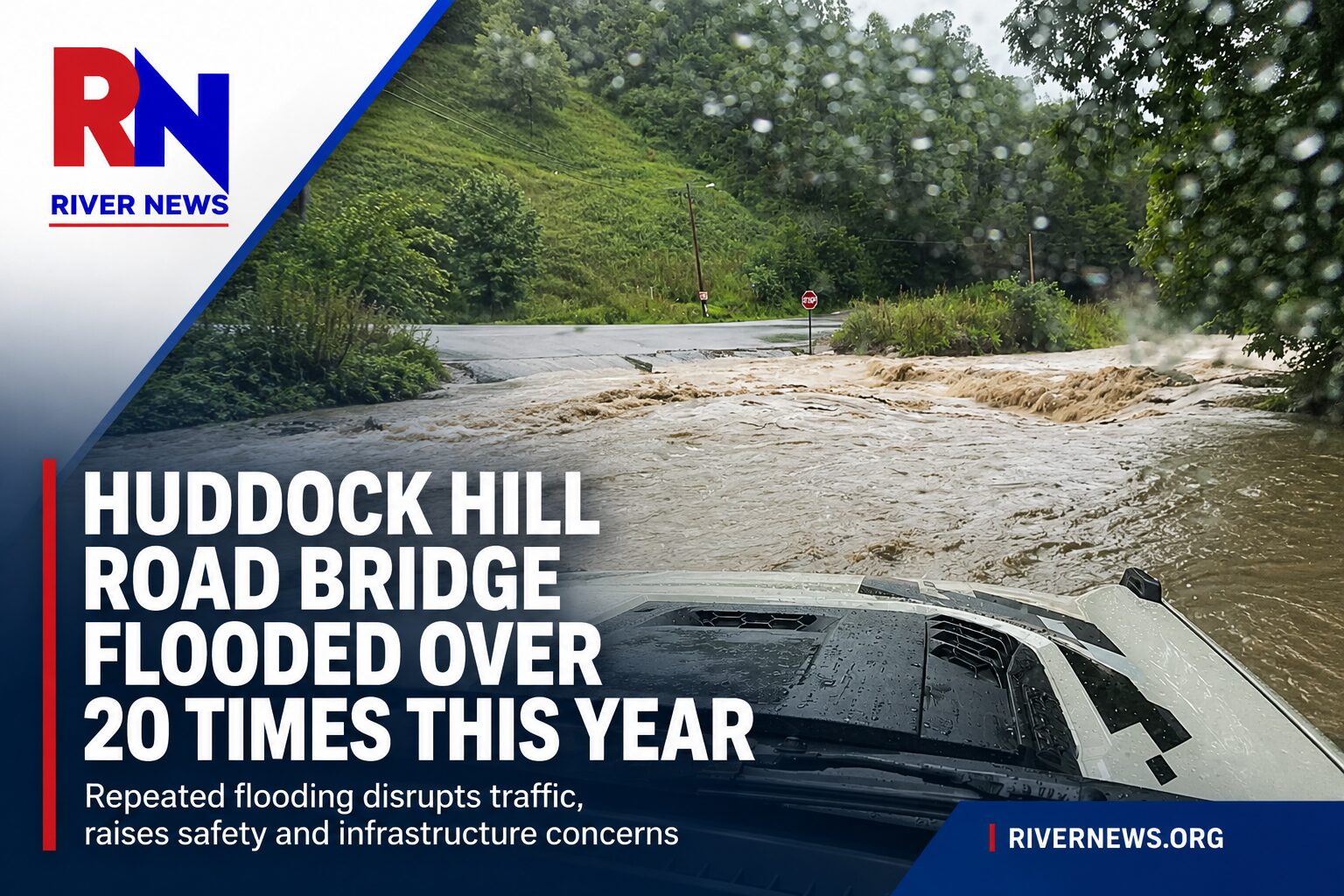
BELMONT COUNTY, OH — Repeated flooding at a bridge along Huddock Hill Road is raising concerns about safety, traffic disruptions and the long-term cost of maintaining the crossing.
The bridge has reportedly flooded more than 20 times so far this year, repeatedly affecting traffic in the area and requiring cleanup and maintenance following high-water events.
Huddock Hill Road is located in Richland Township near Little McMahon Creek. State road inventory records identify Huddock Hill Road as Township Road 220 and show its connection with Methodist Ridge Road.
Flooding in the area is not a new problem. In February 2018, The Times Leader reported that high water from McMahon Creek covered Huddock Hill Road during widespread flooding in the Ohio Valley. At the time, emergency officials warned motorists against attempting to drive through high water.
According to information provided to River News, the current bridge has never been replaced. County crews have instead continued responding to flooding by clearing debris and addressing blockages around the crossing.
Concerns are now being raised over whether continued maintenance remains the most cost-effective approach. It has been alleged that Belmont County has spent enough over time responding to flooding, cleaning up debris and clearing the bridge that those expenses could have funded construction of a new clear-span bridge at the location.
River News has not independently verified the total amount spent on maintenance at the crossing or whether those costs would equal the price of a replacement bridge. Those figures would require county expenditure and project-cost records to confirm.
Beyond the financial questions, repeated flooding creates transportation and safety concerns. When water covers a roadway, motorists can be forced to find alternate routes, while rapidly moving or deceptively deep floodwater can pose a serious danger to drivers.
The situation raises broader questions about whether replacing the existing structure with a clear-span bridge could improve water flow and reduce the frequency of debris accumulation and flooding at the crossing.
Stay with River News for updates.


