

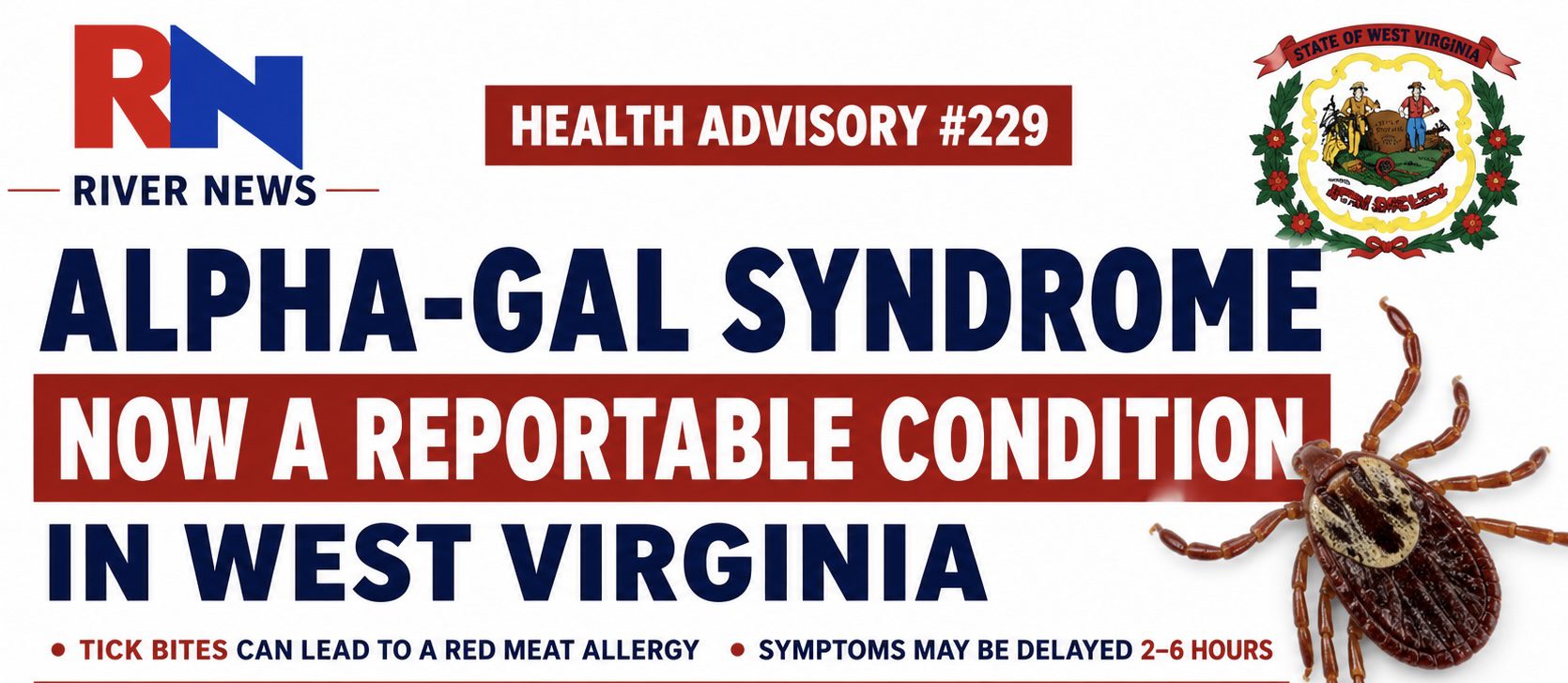
CHARLESTON, W.Va. — The West Virginia Department of Health has officially designated Alpha-gal syndrome (AGS) as a reportable condition, marking a significant step in tracking and addressing a growing public health concern across the state.
According to Health Advisory #229, issued September 11, 2025, healthcare providers and laboratories are now required to report confirmed and suspected cases of AGS to the state. Since the reporting requirement took effect in June 2025, 14 confirmed cases have already been identified, with additional cases currently under investigation.
What is Alpha-gal Syndrome?
Alpha-gal syndrome is an allergic condition triggered by tick bites, most commonly from the Lone Star tick, a species widely found throughout West Virginia and the Ohio Valley.
The condition develops when a tick bite exposes a person to a sugar molecule called alpha-gal. In some individuals, the immune system reacts by producing antibodies, leading to allergic reactions after consuming mammalian products such as red meat or dairy.
Symptoms Can Be Delayed—and Severe
Unlike most food allergies, AGS symptoms are often delayed, typically appearing 2 to 6 hours after eating affected foods.
Common symptoms include:
- Nausea, vomiting, and abdominal pain
- Hives and itching
- Swelling of the lips, face, throat, or tongue
- Coughing, wheezing, or shortness of breath
In severe cases, AGS can cause anaphylaxis, a life-threatening reaction that requires immediate medical attention.
Common Triggers
Health officials say reactions may be triggered by:
- Beef, pork, venison, rabbit
- Dairy products
- Gelatin and meat-based broths
- Certain medications or products derived from mammals
Poultry and fish are not associated with the condition.
Who is Most at Risk?
Individuals who spend extended time outdoors are at higher risk, including hunters, hikers, and outdoor workers. Activities such as walking through tall grass, sitting close to the ground, or handling game animals can increase exposure to ticks.
Diagnosis and Treatment
Diagnosis is typically made by a healthcare provider—often an allergist—through blood testing that detects specific antibodies or through allergy skin testing.
There is currently no cure for AGS. Treatment focuses on:
- Strict avoidance of trigger foods and products
- Carrying emergency medication such as epinephrine
- Preventing future tick bites
Health officials note that some individuals may see improvement over time, especially if they avoid additional tick exposure.
Prevention is Key
The West Virginia Department of Health is urging residents to take precautions, especially during peak tick season:
- Avoid wooded and brushy areas with tall grass
- Use EPA-approved insect repellents such as DEET
- Wear long sleeves and permethrin-treated clothing
- Perform thorough tick checks after outdoor activity
- Shower within two hours of coming indoors
- Keep pets on tick prevention treatments
Public Health Impact
Officials say making AGS reportable will help improve tracking, awareness, and response efforts across the state.
Bottom Line:
A simple tick bite can lead to a serious and potentially life-threatening allergy. With cases now being tracked statewide, health leaders are emphasizing awareness, prevention, and early recognition of symptoms.
For more information, residents are encouraged to contact their healthcare provider or local health department.


