BELLAIRE, Ohio – Bellaire Councilman Jerry Olack claims River News Network misquoted him in an Oct. 10 article concerning the Bellaire water board’s approach to water department personnel issues, denying that he compared to the department to an ‘asylum.’
Olack, who is also chair of the Bellaire water board, appeared angry and confronted River News Network News Director Karen Fatula immediately after the Thursday, Oct. 17 Village of Bellaire council meeting.
Olack repeatedly yelled that River News Network was ‘fake news.”
you’re fake news! you’re a liar!
Jerry Olack, Village of Bellaire council member & water board chairman
At the Oct. 10 water board meeting, Olack, Bellaire told members that the water department must be run like a business and have a “hierarchy.” He said the department is disorganized and compared it to an “asylum.”
the inmates are running the asylum.
Jerry Olack, Village of Bellaire council member & water board chairman at Oct. 10 water meeting
When confronting River News Network after the council meeting on Oct. 17, Olack repeatedly referred to himself in the third person as he denied the quote.
jerry olack didn’t say that!
Jerry Olack, Village of Bellaire council member & water board chairman
When asked if he was indeed Jerry Olack, he confirmed that he was but again said, “Jerry Olack didn’t say that!”
Olack said he has five or six witnesses who agree that he did not say this.
River News Network stands by the accuracy of its reporting.
When asked, Olack said he did not know when the next water board meeting would be held and refused to provide his phone number to check back on the date. He said to call the mayor’s office. On Oct. 18, River News Network called the Village of Bellaire water department, who referred us back to Olack.
Follow River News Network as we report on the Village of Bellaire and its water board.
BELMONT COUNTY, Ohio – Here is the Belmont County court docket for Friday, October 18 from the court website.
7 cases are scheduled.
The schedule is subject to change per the site, which states “that not all events may be represented in the event list. The court has discretion over the information displayed. Also, the user must be a party or associated with a party on the case for the event to be listed in the event list. If you do not see an event in the list, do not assume that it does not exist.”
Supporters of Issue 1 want voters to vote yes to stop gerrymandering. But what is gerrymandering?
According to Brittanica.com, gerrymandering is “the practice of drawing the boundaries of electoral districts in a way that gives one political party an unfair advantage over its rivals (political or partisan gerrymandering) or that dilutes the voting power of members of ethnic or linguistic minority groups (racial gerrymandering).”
The term was derived from from the name of 19th century Massachusetts Governor Elbridge Gerry who enacted a law that redrew state senatorial districts to favor one political party over the other.
According to the Columbus Dispatch, “redistricting happens every 10 years after the U.S. Census is complete. New population data determine how many seats each state gets in the U.S. House of Representatives. Ohio currently has 15 congressional seats, down from a high of 24 from 1963 to 1973.”
However, voting on stopping gerrymandering in Ohio has happened twice in recent years, in 2015 and in 2018, both times seeing voters overwhelmingly approve each measure, according to the Columbus Dispatch.
A new commission, the Ohio Redistricting Commission, was born out of these votes. It is made up of a “seven-member panel of three statewide elected officials (governor, auditor and secretary of state) and four lawmakers who would draw state House and Senate districts and help with congressional districts,” according to the Columbus Dispatch.
Committee members did not work together, according to the Columbus Dispatch, and instead made up their own redistricting plans along Republican and Democratic party lines by 2020. Court battles ensued with statehouse map issues going to the Ohio Supreme Court.
Former Ohio Supreme Court Chief Justice Maureen O’Connor (R) and a group called Citizens Not Politicians have proposed a different way to draw up Ohio’s districts and this proposal is Issue 1.
According to the Columbus Dispatch, “The proposal would replace the current politician-run commission with a 15-member citizen commission of five independents and five members each from the top two political parties, currently the Republicans and Democrats. Members couldn’t be elected officials, lobbyists or political consultants.”
One point those opposed to Issue 1 claim is that using elected officials to redistrict maps is better since those officials are accountable to Ohio’s citizens.
Some of the groups that support Issue 1 include The Ohio Democratic Party, multiple unions, the League of Women Voters of Ohio, American Civil Liberties Union of Ohio, Ohio NAACP, and Planned Parenthood Advocates of Ohio.
Groups that oppose Issue 1 include Ohio Republican Party, Ohio Gov. Mike DeWine, U.S. Speaker Mike Johnson and Ohio Senate President Matt Huffman.
The election is Tuesday, Nov. 5. Early voting in Ohio is already underway.
BELMONT COUNTY, Ohio – The Belmont County Department of Job & Family Services recently announced its new treatment foster home program.
The program will involve collaboration between Belmont, Jefferson and Morgan counties.
Youth who need behavioral health and other specialized services will now be able to stay closer to their communities rather than being treated at outside locations, sometimes even outside the state of Ohio.
The program will connect foster children who are facing significant behavioral challenges with treatment foster families who are trained to support these youth in their homes. Youth can then avoid placement in congregate or group facilities.
Belmont County DJFS along with Jefferson and Morgan Counties have contracted with Kendall Behavior Solutions to complete individual treatment plans for those youth placed in treatment foster homes. All parties will work together to increase the child’s ability to live with a family successfully in the community.
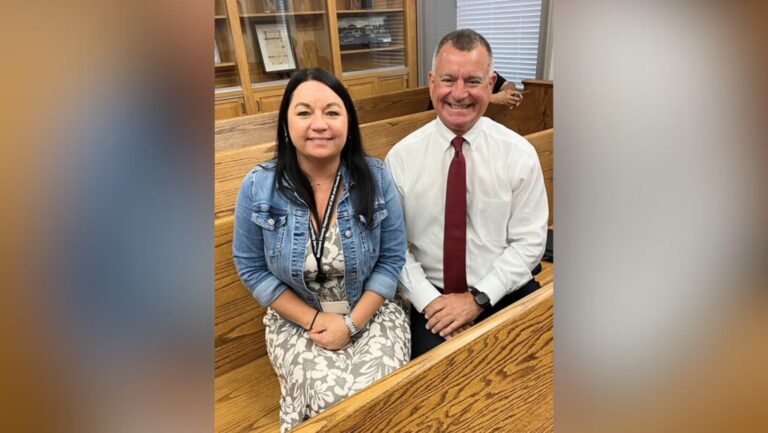
Christy Devore was hired by Belmont County DJFS as the new Treatment Foster Care Supervisor. She will work with any currently licensed family interested in upgrading to a treatment home. She will also work to recruit new homes.
For more information about what treatment foster care is or how to become licensed, call Devore at 740-579-0354 or email her at Christy.Devore@jfs.ohio.gov
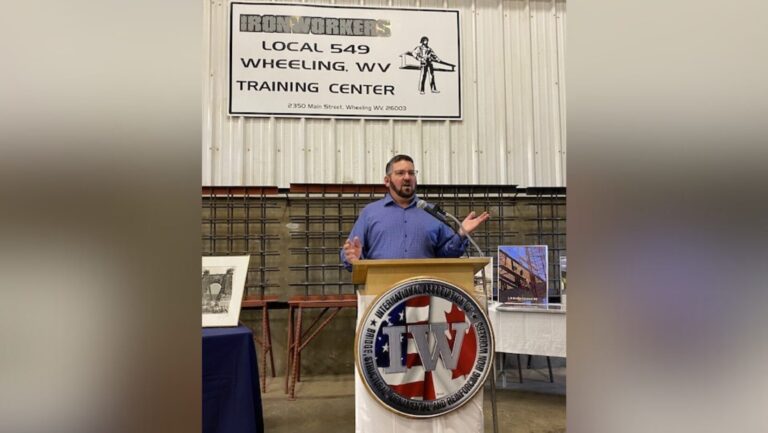
WHEELING, W.Va. – Local apprentices will soon have the chance to train for good jobs in Wheeling in a state-of-the art setting.
On Wednesday, Ironworkers Local 549 announced the $3.5 million expansion of its Center Wheeling location at 2350 Main Street where workers are trained.
The project is funded in part by a $1.75 million construction grant from the Appalachian Regional Commission (ARC) and will add 7,840 square feet of additional space for the training center and larger meeting rooms for members and retirees. Ironworkers Local 549 is providing matching funds of $1.75 million.
ARC’s Partnerships for Opportunity and Workforce and Economic Power Initiative (POWER) directs federal resources to economic diversification and revitalization projects in Appalachian communities affected by the downturn of the coal industry.
The expansion of the training center will allow the union’s Joint Apprenticeship Training Committee (JATC) to train up to 90 apprentices per year, which will be 30 per year in the three-year program.
The apprenticeship provides a great opportunity to work in a field that is in demand and pays a good wage, according to Stephen Sipos, Apprenticeship Coordinator. Sipos says it takes three years to complete the apprenticeship program.
Apprenticeship students start of at $21.77 per hour, which is 60 percent of what a journeyman earns, he said. Students receive a 5 percent raise every six months and graduate from the program earning more than $30 per hour with a full healthcare and benefits package, Sipos explained. Sipos said qualifications for the program include a valid drivers’ license and high school diploma or equivalent.
For more information on becoming a member of Ironworkers Local 549, visit their website at iwlocal549.org or call 304-232-2660
Ironworkers Local 549 Business Agent Kenny Smigle thanked numerous politicians, businesses and partners who supported the project including Senator Shelley Moore-Capito (R-WV), Senator John Fetterman (D-PA), Ohio Means Jobs and the Belmont and Harrison Career Centers.
Smigle said the program and union are important parts of the community.
We look forward to being an important part of the tri-state area for years to come.
Ironworkers Local 549 Business Agent Kenny Smigle
ARC Federal Co-Chair Gayle Manchin said in a written statement that “ARC’s POWER initiative supports coal-impacted communities’ preparation for the next phase of Appalachia’s economy while ensuring that residents have a say in the course of their own futures.”
The Wheeling Ironworkers Local 549 has been a part of the tri-state community since 1937 and has serves Northern Panhandle and other West Virginia counties. They also serve Greene and Washington Counties in Pennsylvania. In Ohio, they serve Belmont, Guernsey, Harrison, Jefferson, Monroe and Muskingum Counties.
ST. CLAIRSVILLE, Ohio – The Belmont County Commissioners recognized one Belmont County woman who works to rescue area cats.
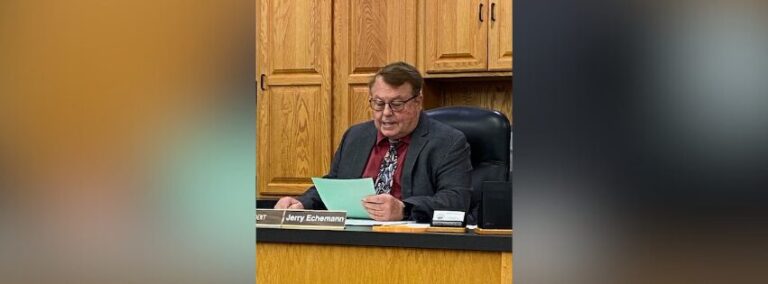
Commissioner Jerry Echemann said Candace Fleagane is an exceptional volunteer who works with the Belmont County Animal Shelter to manage lost and stray cats in the county.
Although the county is not required to capture and contain stray and lost cats, Echemann said it is able to do so with Fleagane’s help.
He said the shelter has one room solely devoted to cats.
Commissioners also approved the purchase of a refurbished copier from MOS Systems for the animal shelter. Commissioner Josh Meyer quipped that the staff could teach the dogs there to use it, but agreed it is needed for the shelter’s paperwork and operation.
In other business, commissioners approved $5,010 for the village of Belmont to pave Water and Sycamore Streets. Echemann explained that the funds are from motor vehicle license taxes and the commissioners are charged with passing the motion from the engineer’s office to utilize these monies.
Commissioners also approved $110,250 for the Ohio Auditor of State’s officials to conduct the county’s audit. Echemann explained all counties are required to pay the state auditors for this service. The state auditors have an office in St. Clairsville, he said.
Commissioners also appointed Larry Merry, the port authority director, to the Eastern Ohio Development Alliance Board.
The Wednesday, Oct. 30 commissioners meeting will be moved back one day to Tuesday, Oct. 29 at 9 a.m. due to a scheduling conflict.
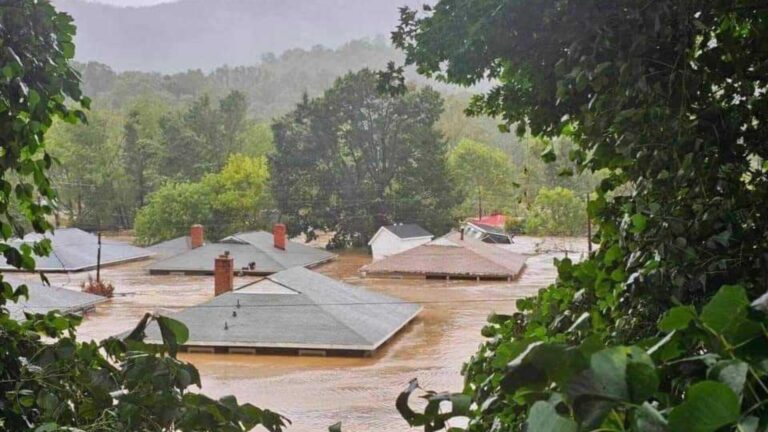
WESTERN NORTH CAROLINA – In the aftermath of Hurricane Helene, there are conflicting reports about disaster response and relief efforts, particularly in Western North Carolina.
One former Ohio Valley resident who has lived in North Carolina since 1998 spoke exclusively to River News Network about her experience following the hurricane. She attended high school and college in St. Clairsville.
She is now a social worker and works on the front lines of the relief effort in a shelter housing nearly 100 people displaced by the storm. Due to the nature of her work, she asked to remain anonymous.
The storm was not predicted to have a major impact
Collapsed highway following Hurricane Helene in Western North Carolina (courtesy of former Ohio Valley resident)
She says the devastation in her area is much worse that what the national media is reporting. She also says Hurricane Helene was not predicted to have a major impact there. The initial storm hit North Carolina Sept. 25 but she says the Sept. 25 weather forecast said there were no tropical storm watches or warnings. Only strong winds and flash flooding with just 8 to 10 inches of rain were predicted over the following days. The actual hurricane hit the evening of the 26th and into the morning of the 27th. The forecast proved terribly incorrect and the actual weather deadly.
Our area received 15 inches plus of rain the night of September 25 and into the morning of September 26. By 8 a.m. on the 26th, we had flash flooding in my immediate area which had come across interstate 64, so I was unable to get to work on my normal route.
By 10 that morning, we had to open up the shelter due to a 55+ RV/mobile home park being evacuated for flash flooding.
Former St. Clairsville, Ohio resident and current North Carolina social worker
The former Ohio Valley resident says North Carolina has experienced heavy rainfall from prior hurricanes, especially ones that come up from the Gulf of Mexico but the majority have turned more toward the coast and didn’t hit the mountains head-on like Hurricane Helene did. Many large trees, some more than 100-years-old, were felled by the storm. Roadways crumbled into sink holes and the rain seemed like it would never end.
I have never witnessed flooding in my area like this in all my time in North carolina. We are in the mountains of North carolina and most areas are at least 2,500 feet above sea level, so we have never really been concerned about hurricanes since we are so far from the ocean.
Former St. Clairsville, Ohio resident and current North Carolina social worker
Local law enforcement, churches and citizens were first to help
After the hurricane, she says the most immediate rescue response came from local law enforcement, emergency management and local water rescue. Churches and private citizens are providing supplies to storm victims.
Bottled water was being brought into the area from churches and organizations from all over. Private planes and helicopters were being used to bring in supplies to areas where roads have been washed away. Food is still challenging and entire sections of grocery stores are empty.
Former St. Clairsville, Ohio resident and current North Carolina social worker
FEMA arrived five days after the storm
FEMA was not on scene until after September 30, five days after the storm, she says.
She said the help FEMA did provide was not very effective. For instance, FEMA provided vouchers for temporary housing at hotels, but people had to travel 5 to 6 hours to find a hotel that would accept the government vouchers. The vouchers are only good for 30 days, so she wonders what will happen when the vouchers expire and people have no place to return to. She predicts it will take years for North Carolina to recover, saying the level of devastation is “beyond explanation.”
She said federal cash and food stamp benefits will be available, but take time to reach families due to processing times. FEMA disaster unemployment pays 50% of lost wages and each family in affected areas may be eligible for another $750 from FEMA. Storm victims can apply for D-SNAP (disaster food stamps) starting October 18, she says.
The American Red Cross response was “embarrassing”
She strongly criticized the American Red Cross, calling their response embarrassing, and urged people not to donate to them, saying money needs to go to the local communities in need, not to national groups.
I have been embarrassed by how the Red Cross has handled this situation as well as how they have handled the shelters since they took over.
Throwing away perfectly good in date non-perishable items that could have been handed out to community members who went without food.
Closing down shelters and having local funds used to put people into hotels.
Sending away clothing donations when people were being helicoptered in wearing wet, Mud-covered clothing.
Former St. Clairsville, Ohio resident and current North Carolina social worker
She said victims arrived at her shelter after not having eaten in days and shelter staff had no clothing or towels for them. She says the Red Cross told staff that they aren’t required to provide showers for victims until five days after a disaster. She says when they finally set up shower facilities, the Red Cross did not even provide basic items and adults had to resort to sharing hand towels to dry off with since no full-size towels were available.
The Red Cross typically sends support staff into the emergency shelters around 72 hours after a disaster, and they came to the shelter on September 30 but did not immediately take over operations, she says.
Local radio stations manned the airwaves and cash was king
There was a total communication breakdown following Hurricane Helene, she says. Internet and cell phone service was down and is still unreliable. People turned to their local radio stations for news and updates. Gasoline was in short supply and cash was king in the stores that did have supplies to sell.
Gasoline was difficult to obtain to run generators, for those lucky enough to have one, so people had to use their limited gasoline sparingly. With major roadways blocked or washed out, supply chain issues were out of hand.
Most stores and gas stations were cash only for several days, so if you didn’t have cash, you couldn’t get food or gas.
No one had any way to get information, so those who still had radios were able to get updates from local radio stations.
Former St. Clairsville, Ohio resident and current North Carolina social worker
Medical supplies and food remain in short supply.
We have a severe shortage of IV fluids. Shelves are sparse at the grocery stores. It took over 10 days for packages to start being delivered again.
Former St. Clairsville, Ohio resident and current North Carolina social worker
Turning the disaster into a political issue is “ridiculous”
While people scrambled to survive, politicians weighed in. Turning the hurricane into a political issue is “ridiculous” and takes the spotlight away from the storm victims who are in desperate need of help, she says.
Also, the biggest issue has been that this has turned into a “political issue” seeing as how North Carolina is one of the supposed “swing states”. The ridiculous spewing of politicians and their local supporters as well as complete lack of understanding of FEMA processing has stolen the spotlight of the catastrophic flooding and devastation.
Former St. Clairsville, Ohio resident and current North Carolina social worker
She says polling stations are open now and early voting is underway. Banks and post offices have also reopened.
The actual death toll may never be known and bodies may never be recovered
The St. Clairsville native lost a friend due to the storm.
I lost a former coworker and friend to a landslide, and she had 10 more immediate family members killed by the same landslide.
Former St. Clairsville, Ohio resident and current North Carolina social worker
More than 100,000 people in Henderson County, North Carolina were affected by the hurricane, she says. The death toll in the state is still unknown with many bodies that may never be recovered due to mud slides.
Unfortunately there seems to be some uncertainty in the actual number due to so many people who are believed to be missing. Henderson County shows as 7 deaths with 42 in Buncombe County.
I have heard it may be months until they can get official counts and with the catastrophic level of flooding and mud slides (something like 288 in Western North carolina.) there is a strong possibility that some may not be found.
Former St. Clairsville, Ohio resident and current North Carolina social worker
Water may be contaminated
Power has been restored to most parts of the storm area, but some areas were without electricity for 17 days, even with linemen working non-stop. Water access remains a problem for some areas including Asheville which needs extensive water line repairs. She said many people in the area rely on well water, but they are concerned about contamination.
Most local roads are repaired and passable but Interstates 26 and 40 through Tennessee remain closed, she said. She added that the main roads going through Chimney Rock and Bat Cave, North Carolina were demolished and access to those areas is limited.
Some pets had to be euthanized, others drowned
Livestock and pets were also affected by the hurricane. Livestock was swept away in flood waters and local animal shelters are inundated with cats and dogs displaced by the storm. During the storm, one desperate woman who was away from her home turned to social media to beg for someone to rescue her dog, but no one could reach her home and the dog drowned in its crate. One animal was found with a broken back and was euthanized.
What does North Carolina need right now? How can I help?
Cold weather has arrived in the mountains of North Carolina with temperatures now dipping into the 30s, and the residents need warm coats and clothing. They also need sleeping bags and tents. Medical supplies including IVs are in short supply. There is also a need for dehumidifiers. air purifiers and mold treatment products, she says.
She recommends donating to the local North Carolina charities linked below:
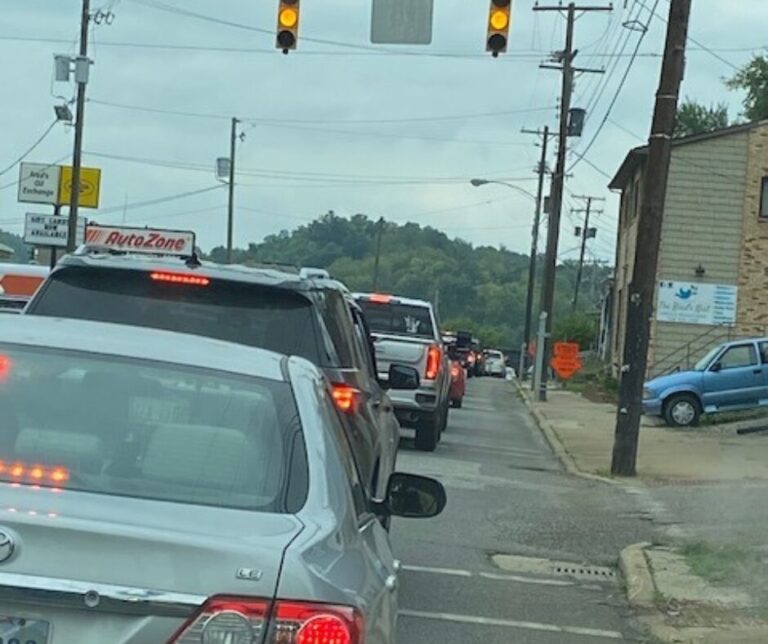
BRIDGEPORT, Ohio – Motorists in the Bridgeport area are still facing traffic jams due to construction on Route 40, but the Ohio Department of Transportation says the project is close to completion.
The U.S. Route 40 culvert project in Brookside has tied up traffic through Bridgeport for several months but should be completed November 30, according to Lauren Borell, Public Information Officer for ODOT District 11.
Residents have asked why the work cannot be done overnight when there is less traffic and impact to the neighborhood. Borrell said night work is not an option.
Due to the nature of the project, construction is only permitted during daytime hours.
Lauren Borell, Public Information Officer for ODOT District 11.
The Blaine Hill Bridge closure adds to the Bridgeport-area traffic congestion. Borrell says ODOT is working to secure the $18 million needed for bridge funding.
BELMONT COUNTY, Ohio – Here is the Belmont County court docket for Wednesday, October 16, from the court website.
38 cases are scheduled.
The schedule is subject to change per the site, which states “that not all events may be represented in the event list. The court has discretion over the information displayed. Also, the user must be a party or associated with a party on the case for the event to be listed in the event list. If you do not see an event in the list, do not assume that it does not exist.”
BELMONT COUNTY, Ohio – Here is the Belmont County court docket for Thursday, October 17, from the court website.
38 cases are scheduled.
The schedule is subject to change per the site, which states “that not all events may be represented in the event list. The court has discretion over the information displayed. Also, the user must be a party or associated with a party on the case for the event to be listed in the event list. If you do not see an event in the list, do not assume that it does not exist.”