



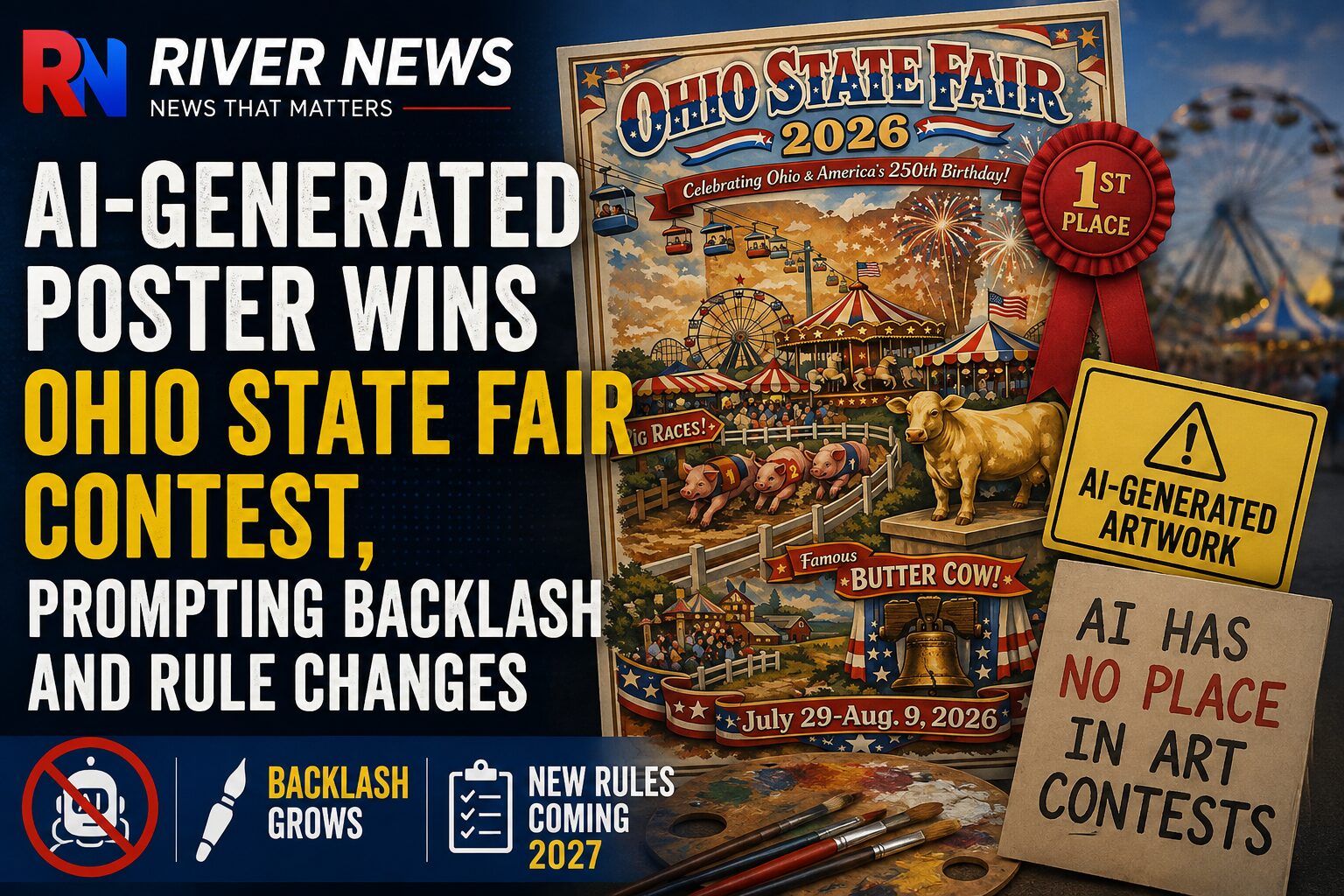
COLUMBUS, Ohio — An AI-generated poster awarded first place in an Ohio State Fair competition is drawing criticism from artists and fairgoers, and organizers say artificial intelligence will be prohibited from the contest next year.
The winning entry was created by Christin Billips of Westerville and earned a $1,000 first-place prize. Both professional and amateur artists were permitted to enter the competition.
This year’s theme centered on America’s 250th anniversary while showcasing Ohio history and State Fair traditions.
Following the announcement of the winner, attention quickly turned to the use of artificial intelligence in creating the poster. Critics also pointed to apparent AI-generated errors within the artwork, including inaccurate details on American flags and problems with some of the poster’s lettering and labels.
The controversy has sparked a larger discussion about whether AI-generated work should compete alongside artwork created through traditional methods.
Some artists and fairgoers argued that allowing AI-generated entries creates an unfair comparison with contestants who spend significant time developing and creating their work by hand or through traditional digital design methods.
Art educator Victoria Douglas was among those calling for changes, arguing that rewarding AI-generated work in an art competition diminishes the time, skill and creativity involved in producing original artwork. Douglas has publicly called for AI-generated entries to be prohibited from future state fair competitions.
Despite the criticism, the winning entry did not violate the rules in place for the 2026 competition.
An Ohio State Fair spokesperson acknowledged that advances in artificial intelligence have occurred faster than organizers anticipated and said the competition’s policies will be reevaluated ahead of 2027.
As part of those changes, AI-generated work will be prohibited from the poster competition beginning next year.
Fair officials noted that several other Ohio State Fair art competitions already prohibit artificial intelligence, including its fine arts exhibition, creative arts competition, mural contest and plein air painting.
The controversy comes as art competitions, schools and other organizations across the country continue to determine how AI-generated content should be treated alongside traditionally created work.