



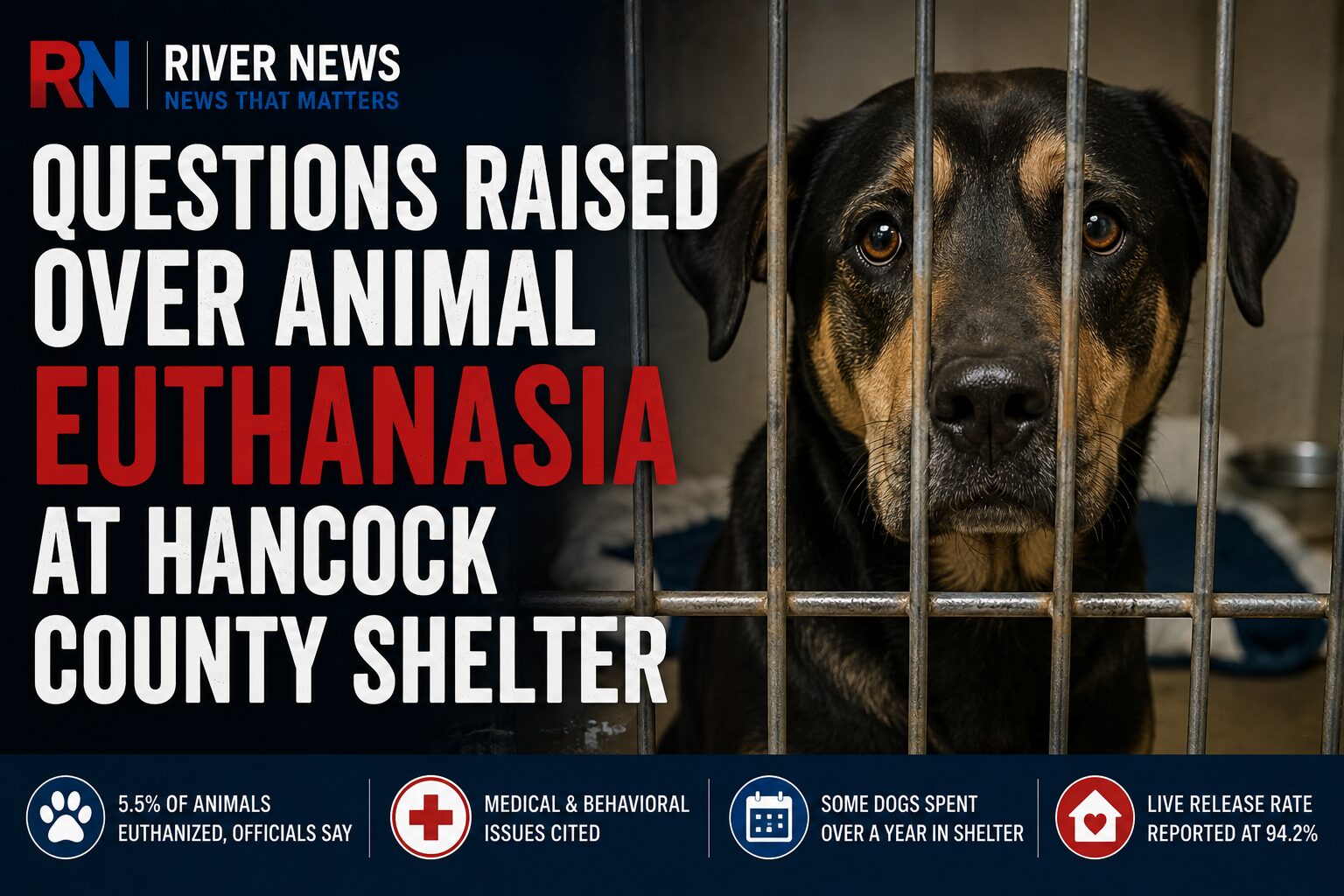
HANCOCK COUNTY, W.Va. — Questions surrounding animal euthanasia at the Hancock County Animal Shelter are drawing attention after a social media post raised concerns about the number of animals euthanized since the Jefferson County Humane Society Foundation took over shelter operations in November 2025.
Shelter officials say 5.5% of animals entering their care have been euthanized, citing severe medical conditions, bite histories and significant behavioral deterioration among the reasons for those decisions.
According to information released by shelter officials, six of the euthanized dogs were strays, three were being held because of bite incidents and seven were described as suffering from “kennel craze.”
Kennel craze refers to behavioral deterioration that can occur when an animal remains in a shelter environment for an extended period. Officials say affected dogs can become increasingly anxious, withdrawn or aggressive.
The length of time some animals remained at the shelter has also become part of the discussion. Officials said approximately seven of the dogs that were eventually euthanized had spent more than a year at the facility, including one animal that remained there for 460 days.
Shelter representatives maintain euthanasia is considered only after other options have been attempted. Staff members reportedly meet each morning to review individual animals and develop plans involving enrichment, additional walks and time outside their kennels.
One case highlighted by officials involved a dog named Diamond, who spent 177 days at the shelter before being adopted. According to the shelter, Diamond later bit another dog in the home and was returned. Officials said she subsequently lunged at shelter employees.
Still, the disclosures have prompted questions from members of the community about whether more could be done to prevent animals from deteriorating during lengthy shelter stays and whether additional fostering, rescue transfers, behavioral intervention or other alternatives could be pursued before euthanasia.
The shelter reports a current live release rate of 94.2%, meaning the large majority of animals leave the facility alive. A 90% live release rate is commonly used as a benchmark by organizations identifying as “no-kill,” although that designation does not mean euthanasia never occurs.
The shelter’s longest current resident is Clarke, a 6-year-old Rottweiler mix who has reportedly spent 289 days waiting for a home.
The discussion now extends beyond the shelter’s overall release rate to the circumstances surrounding individual euthanasia decisions and what options are available for animals experiencing behavioral problems after extended periods in a kennel environment.