



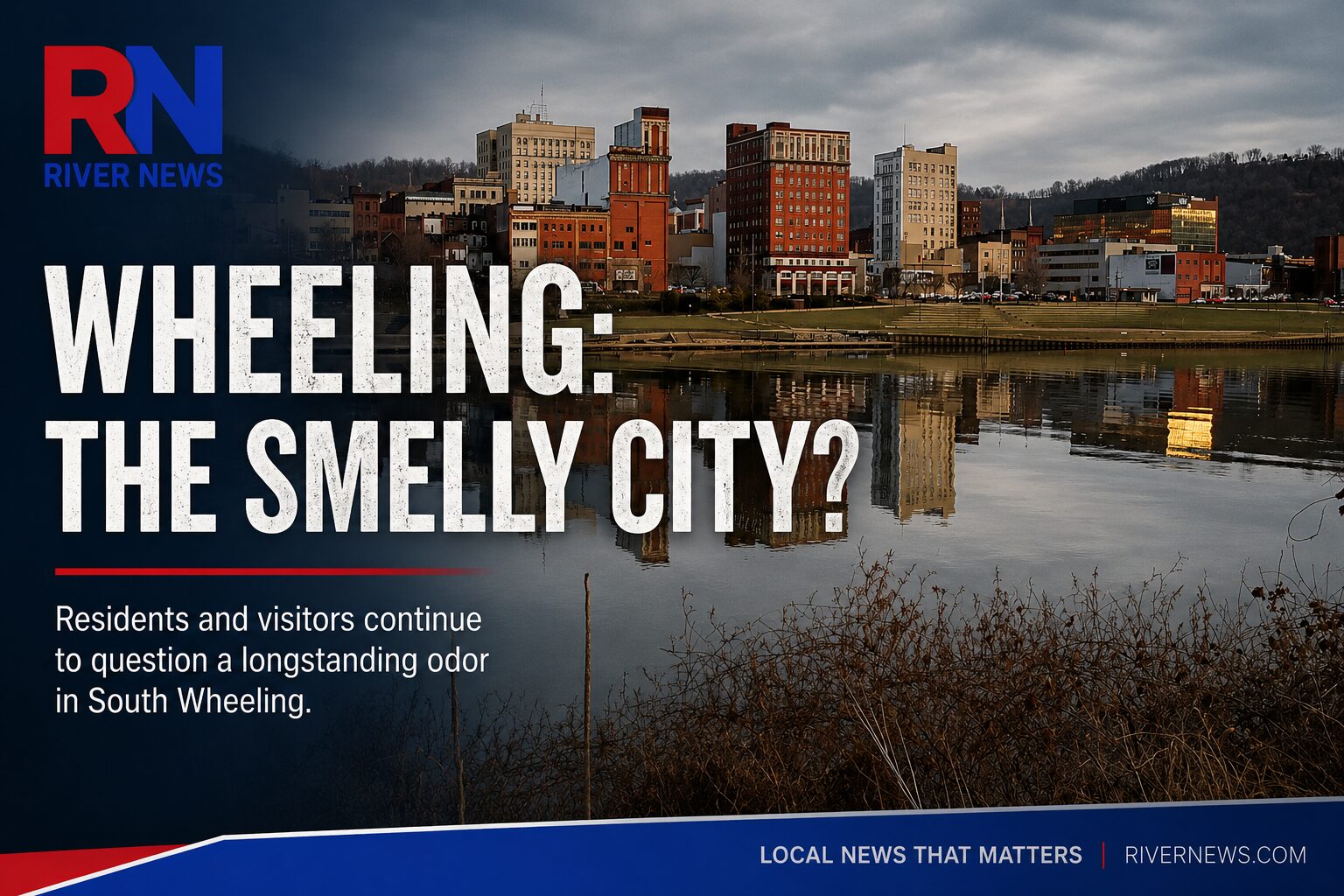
Every city has a nickname.
Some are known for industry. Some for sports. Some for culture.
And then there’s Wheeling.
For years, residents and visitors have joked about a persistent odor that often greets people entering South Wheeling. The smell has become so familiar to many locals that it rarely sparks conversation anymore. For outsiders, however, it’s often one of the first things they notice.
The source of the odor has long been a topic of debate. Many residents point to industrial facilities and wastewater operations along the Ohio River corridor. Others say the smell varies depending on weather conditions, river levels, and wind patterns.
Whatever the cause, the issue has become part of South Wheeling’s reputation.
Ask longtime residents about the smell and many will shrug it off. Some say they’ve simply grown accustomed to it after years of living nearby. Visitors often have a different reaction.
Questions about the odor routinely surface on social media, in community discussions, and in conversations among people passing through the area. For some, it’s a minor nuisance. For others, it’s a quality-of-life issue that reflects poorly on one of the city’s primary gateways.
The concern also raises broader questions about economic development and public perception.
Over the years, Wheeling has invested heavily in downtown revitalization, waterfront improvements, tourism initiatives, and efforts to attract new residents and businesses. Yet South Wheeling continues to be associated with an odor that many believe undermines those efforts.
There is no evidence that the smell alone has harmed economic development, but business owners and residents have long questioned whether it affects how visitors view the area.
City leaders and utility officials have periodically addressed odor concerns, though many residents argue the issue has never been fully resolved.
Whether the solution is simple or complex, inexpensive or costly, one fact remains clear: the odor continues to be one of the most talked-about aspects of South Wheeling.
For a city working to shape its future, that may be a conversation worth revisiting.