



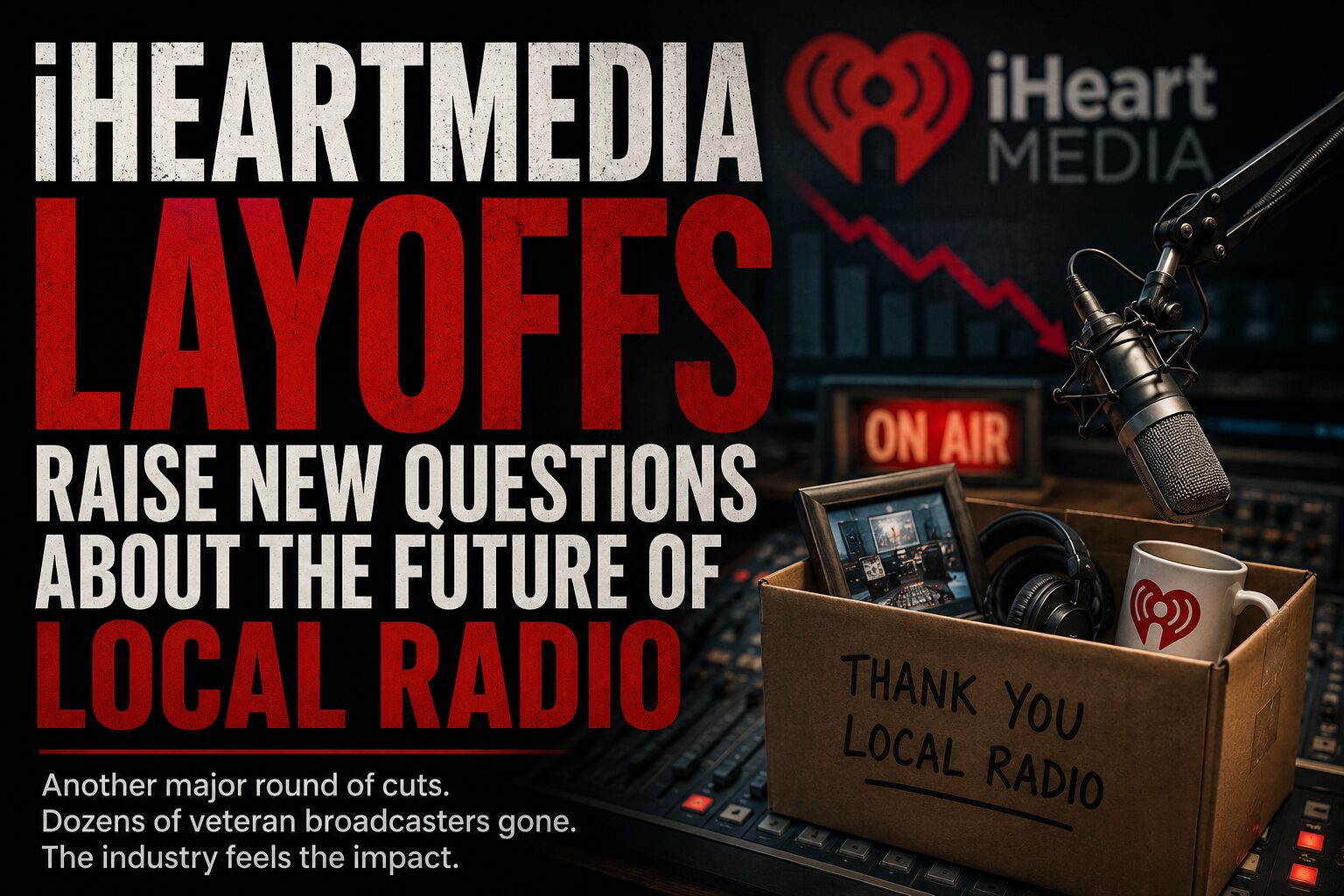
Another major round of layoffs at iHeartMedia is sending shockwaves through the radio industry, with programming and on-air employees losing their jobs in markets across the country as the company continues a nationwide restructuring effort.
According to industry reports, the latest cuts could rival—or even surpass—the sweeping layoffs iHeart implemented in 2009 and 2020, making this one of the largest workforce reductions the radio business has ever seen.
The company told employees it is restructuring to move faster, expand its use of technology, and create a more centralized programming model. While executives said some new positions will be created, they also acknowledged many existing roles would be eliminated as part of the transition.
As names continue to emerge, dozens of respected radio personalities, program directors, producers, and sales leaders from markets large and small have publicly confirmed their departures. Many spent decades serving their local communities before learning their positions had been eliminated.
For those who still believe local radio is dying because listeners have moved elsewhere, many broadcasters argue a different story. They say local radio hasn’t disappeared because people stopped caring—it has been weakened by years of consolidation, centralized programming, and cost-cutting that replaced local voices with syndicated or voice-tracked content.
Independent broadcasters have warned about this trend for years. When stations lose local morning shows, local news coverage, community involvement, and personalities who actually live in the markets they serve, they also risk losing the connection that made local radio valuable in the first place.
The latest layoffs are also renewing concerns throughout the industry about career stability. Veteran broadcasters with decades of experience continue to leave the business, and many remaining employees are questioning what the future holds as companies increasingly rely on automation and centralized operations.
While iHeartMedia says the changes are intended to strengthen its long-term business and better leverage technology, the latest restructuring is likely to fuel an ongoing debate over whether large-scale consolidation has come at the expense of the local programming that once defined American radio.
For independent radio companies, the moment also serves as a reminder of what sets them apart. Local ownership, live personalities, community involvement, and locally produced programming remain advantages that cannot easily be replicated from a national programming hub.
As this latest round of layoffs continues, one thing is becoming increasingly clear: the conversation surrounding the future of radio is no longer about whether the industry is changing—it is about what kind of radio will survive when the changes are complete.