



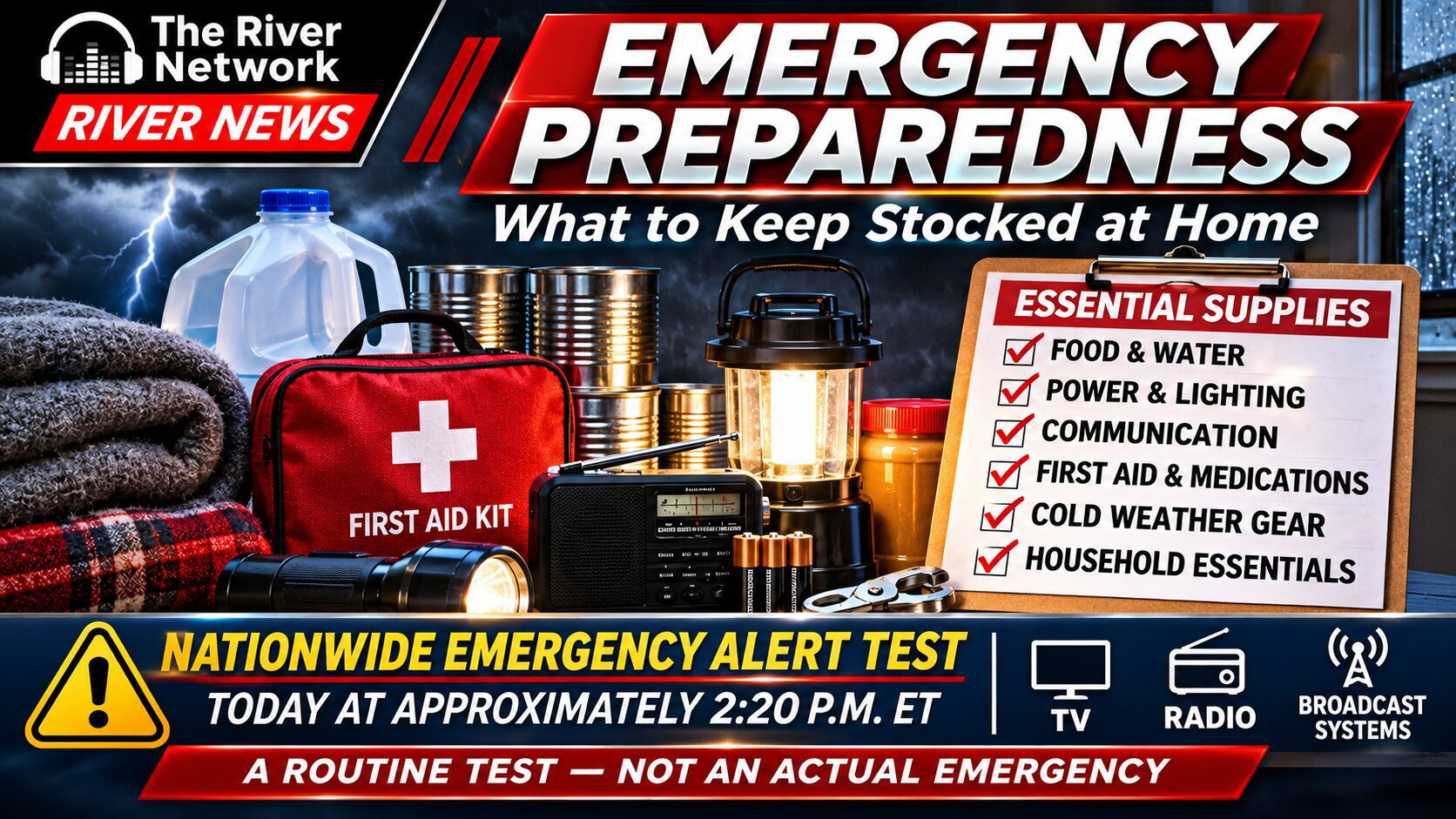
OHIO VALLEY — November 17, 2026 — A nationwide Emergency Alert System test is scheduled for Tuesday afternoon, offering a timely reminder for Ohio Valley residents to review their household emergency supplies.
The Federal Emergency Management Agency (FEMA), working with the Federal Communications Commission (FCC), will conduct the test at approximately 2:20 p.m. Eastern Time.
The test will briefly interrupt regular programming on television and radio stations, including cable and satellite services. The interruption is expected to last approximately one minute.
Cellphones will not receive an alert during this test. Officials emphasize that it is a routine test of the nation’s emergency warning system, not an indication of an impending emergency. No action is required from the public.
While the test is unrelated to any specific threat, it serves as a reminder that unexpected power outages, severe weather and other emergencies can temporarily disrupt everyday services.
What Should You Keep Stocked at Home?
Emergency preparedness officials recommend keeping enough supplies to support household members for at least 72 hours. Having additional supplies for one to two weeks can provide greater flexibility during prolonged disruptions.
Food and Water
- Bottled water — at least one gallon per person per day.
- Canned vegetables, fruit, beans, soups and meats.
- Peanut butter, crackers, granola bars and dried foods.
- Nonperishable foods that require little or no cooking.
- A manual can opener.
- Extra baby formula, diapers and pet food when needed.
Power and Communication
- Flashlights and extra batteries.
- Portable cellphone chargers and power banks.
- Battery-powered or hand-crank radios.
- Battery-operated lanterns.
- Charging cables and car chargers.
- A written list of emergency contacts.
- Cash in small denominations in case electronic payments are unavailable.
Medical and Personal Supplies
- First-aid kits.
- Necessary prescription medications.
- Basic over-the-counter medications.
- Toilet paper, soap and hand sanitizer.
- Disinfecting wipes and trash bags.
- Personal hygiene products.
Cold Weather and Household Essentials
- Extra blankets and sleeping bags.
- Warm clothing, gloves and winter coats.
- Battery-operated carbon monoxide detectors.
- Basic tools and emergency supplies.
- Copies of important documents stored in a waterproof container.
- Printed maps and an emergency contact plan.
Residents using generators should operate them outdoors, at least 20 feet from doors, windows and vents, to prevent carbon monoxide poisoning.
How Much Is Enough?
For a family of four, a three-day emergency supply should include at least 12 gallons of drinking and sanitation water, along with enough nonperishable food for everyone in the household.
A two-week supply would require at least 56 gallons of water for the same family.
Emergency supplies do not need to be purchased all at once. Residents can gradually build their stock by adding a few extra items during regular shopping trips.
Being Prepared Without Panicking
Tuesday’s nationwide alert test is a scheduled safety exercise designed to ensure the public can receive important information during actual emergencies.
There is no need to rush to stores or make unnecessary purchases because of the test.
However, maintaining a basic emergency supply can help families remain comfortable and safe during unexpected disruptions, whether caused by winter storms, flooding, power outages or other circumstances.
River News encourages Ohio Valley residents to use the occasion to review their emergency plans, check existing supplies and stay informed through reliable local and official sources.
Sources: Federal Emergency Management Agency (FEMA), Federal Communications Commission (FCC), Ready.gov and CDC emergency preparedness guidance.