



JEFFERSON COUNTY, Ohio — Debate continues to grow across the Ohio Valley as several proposed carbon capture and underground storage projects move through the planning process in eastern Ohio and northern West Virginia.
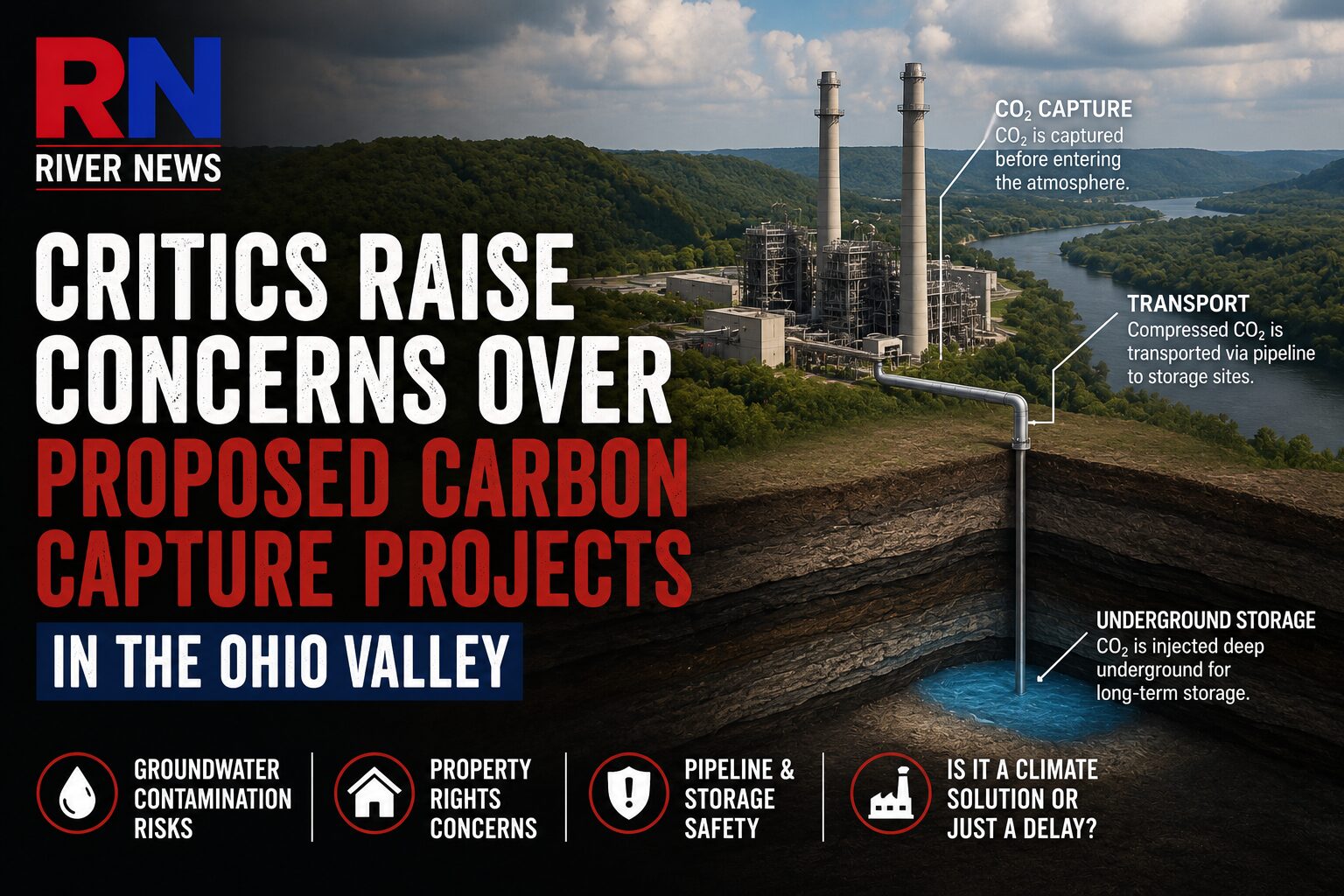
Carbon capture technology is designed to collect carbon dioxide emissions from industrial facilities before they enter the atmosphere. The captured gas is then compressed and injected deep underground for long-term storage. Supporters say the process can help reduce greenhouse gas emissions from industries such as power generation and steel manufacturing.
Critics, however, argue the technology raises environmental, safety and property rights concerns while offering only limited benefits in reducing overall emissions.
Environmental researcher Dr. Randi Pokladnik said carbon capture may encourage companies to continue producing carbon dioxide rather than investing in ways to reduce emissions at their source.
She also noted that while billions of metric tons of carbon dioxide are released globally each year, current carbon capture operations account for only a small percentage of those emissions.
Among the concerns raised by opponents is the possibility of groundwater contamination if stored carbon dioxide were ever to escape underground. Critics say leaks could alter groundwater chemistry and potentially affect drinking water supplies, agriculture and livestock.
Pipeline and storage safety have also become part of the discussion. Opponents often point to the 2020 carbon dioxide pipeline rupture near Satartia, Mississippi, as an example of the potential hazards associated with transporting and storing compressed carbon dioxide.
Another issue involves property rights. Under proposed Ohio legislation, underground pore space could be approved for carbon storage if at least 70 percent of affected property owners agree, potentially allowing the remaining underground space to be used even if some landowners object. Some residents have questioned how that could impact future property values, insurance and real estate transactions.
Energy developer Tenaska continues to pursue several proposed carbon storage hubs throughout the tri-state region. Company officials have said each facility could be capable of storing up to 5 million metric tons of carbon dioxide annually.
Tenaska has also stated that its projects undergo extensive geological testing before construction and would be subject to long-term monitoring during operation and after closure to ensure the carbon dioxide remains safely contained underground.
The proposed projects remain under review as regulators, industry leaders, environmental organizations and local residents continue weighing the potential economic benefits against environmental and community concerns.