



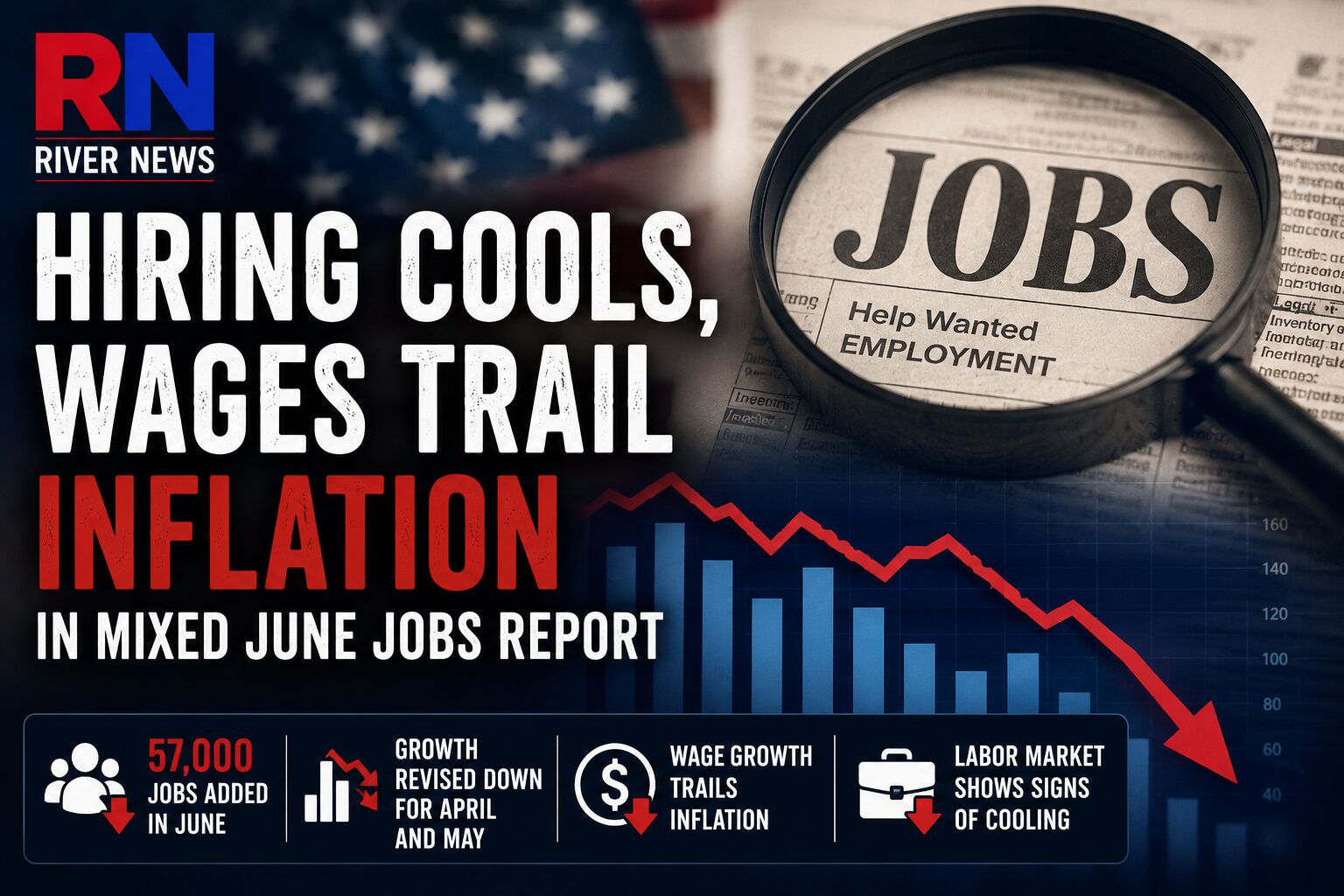
WASHINGTON — Hiring slowed significantly in June as the U.S. labor market continued to show signs of cooling, according to the latest report from the U.S. Bureau of Labor Statistics.
Employers added 57,000 jobs during the month, well below economists’ expectations of roughly 115,000 new positions. The government also revised April and May employment figures downward by a combined 74,000 jobs.
Despite the slower hiring pace, the national unemployment rate remained relatively stable at 4.2%, down slightly from 4.3% over the previous three months.
Economists described the report as a mixed picture. While job growth has weakened, many believe the current pace is still enough to keep unemployment from rising significantly as both hiring demand and labor force growth continue to slow.
Over the past year, the U.S. economy has added roughly 500,000 jobs, marking one of the slowest periods of employment growth outside of the pandemic.
Wages continued to rise in June, with average earnings increasing at an annual rate of 3.5%. However, that growth continues to trail inflation, which remains above 4%, meaning many workers are still losing purchasing power as everyday costs outpace pay increases.
Several industries continued adding jobs, including health care, social assistance, and professional and business services. Manufacturing posted only modest gains, while the leisure and hospitality sector lost approximately 61,000 jobs after stronger hiring earlier this year.
The report also highlighted ongoing challenges in the labor market. Nearly two million Americans have been unemployed for 27 weeks or longer, more than six million people remain outside the labor force despite wanting a job, and about 4.5 million workers are employed part-time because they have been unable to find full-time positions.
Economists say the latest employment figures are unlikely to change the Federal Reserve’s focus on inflation. With price increases continuing to outpace wage growth, many analysts expect the central bank to leave interest rates unchanged when policymakers meet later this month.